About
About
I have always been inspired by a very simple question - what is the ideal path from an idea to the best possible solution - and why? What even defines a “good”, how do you evaluate it, what is the solution space and (when) do you stop chasing perfection?
Whether at Porsche - turning Esports Racing into a competitive success story, or at C3 AI - enabling Fortune 500 companies to use AI in production, the journey of reducing systemic entropy to find a solution fascinates me.
Currently I work for at the exciting intersection between transformative ideas involving AI and the sobering reality of enterprise production systems. My job starts with defining what good ideas are, and if they can (or rather should) be turned into reality. My 9-5 is involving stakeholders and challenging these ideas, defining the appropriate approach, implementation and validation. All of this is in an everlasting awe of finding the perfect framework for a true solution - the truly sensible, organisationally beneficial and economically viable use of AI in enterprises.
So what do i actually do professionally?
My job is to identify and quantify the root causes of misalignments, then personally drive, productize, evaluate, and maintain a technical solution for long term use.
Sounds simple enough, right?
Project Management 101?
Well not quite…
Most initial conversations today revolve around what enterprise AI technology can do. Whether it’s coming from customer inquiry or as a supplier offering, generally the first contact circles around a loose scope and undefined expectations.
In my experience, customers generally ask for something they assume they need and then buy from a provider who generally offers something they assume they want to use and to pay for.
So my job is resolving a simple misalignment, right?
It is much deeper than that!
Misalignment is a symptom rather than a cause. It stems from a dynamic mix of communication silos, unclear strategy and vision, unrealistic expectations, competing priorities, organizational ambiguities, misunderstood incentives and many more.
To deliver successful enterprise projects, I rely on my battle-tested framework that prevents misalignment before a technical implementation is made. Read more about my approach in this blog post.
Here are a few things I have built recently:
- A GenAI maintenance agent for Holcim, combining LLMs, NLP, OCR and retrieval augmented generation, which reduced mean time to resolution by 40% globally.
- An AI reliability solution for Johnson Controls with 73% model precision and 71% recall, generating up to $178M in annual benefits.
- A supply chain demand forecasting system for GSK, improving forecast accuracy by 12 percentage points across a portfolio worth over $100M.
In the end, I don’t just bridge the gap between what customers think they need and what providers assume they want. I eliminate the underlying friction so technical solutions can actually drive lasting business value.
Am i good at what i do?
Well. It’s an easy thing to claim, so instead here’s the record to check it against.
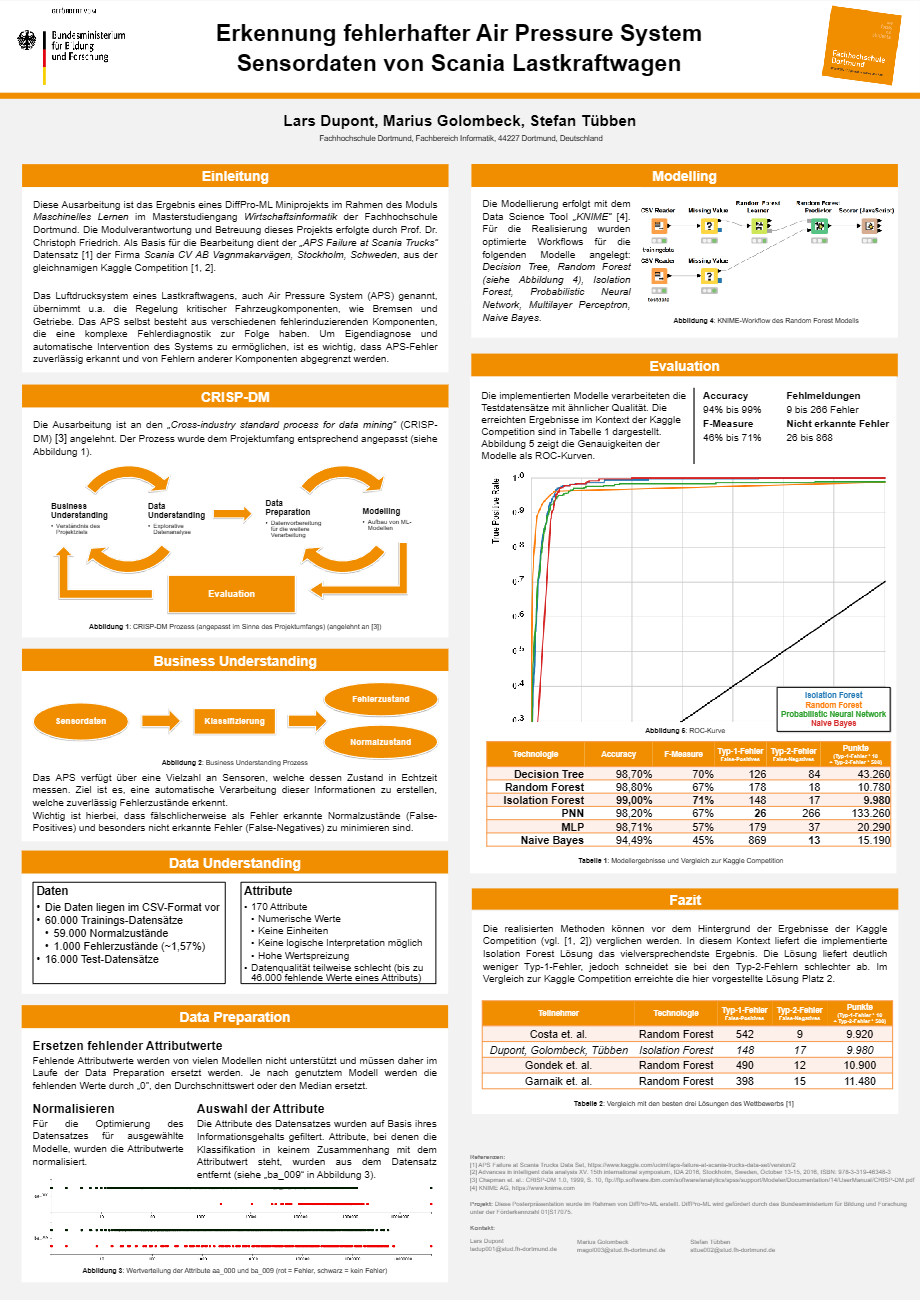
After graduating with honours from the University of Applied Sciences and Arts Dortmund, an M.Sc. in Business Informatics with a thesis putting convolutional neural networks to work on predicting travel destinations, I went to find out whether any of it survives contact with a real business.
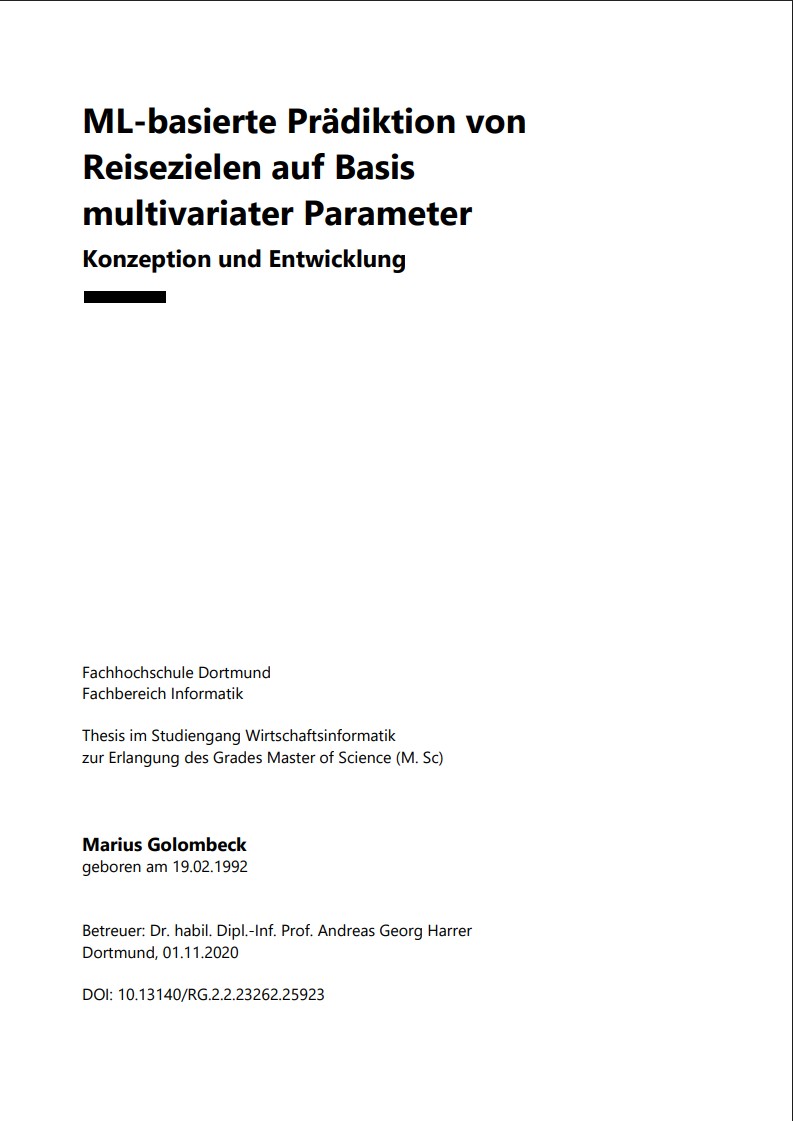
Porsche Motorsport from 2018 to 2022: Joined the Motorsport IT department as a software engineer, shipped a cross-platform app to over 35.000 employees (creating up to 32M EUR in savings) as well as an SAP-integrated system for just-in-time logistics. Then I pivoted to management and built Porsche’s Esports Racing programme from scratch, touching 25+ markets with organic reach of 16x in under eighteen months. In 2020 i led a newly formed team of over 50 to win the 24 Hours of Le Mans Virtual. Motorsport is an excellent teacher. The result is public, it is measured to the thousandth, and nobody cares how hard you tried - only if you won.

C3 AI - since 2022: I manage customer solutions as the principal technical advisor to Fortune 500 organisations, owning the engagement end to end - the first discovery call, the evaluation framework that decides whether the thing ships, the production deployment that follows. Four years at C3 AI and 60+ pre-sales engagements later, that adds up to more than $16M in contract value and a $45M+ pipeline across nine enterprise clients.
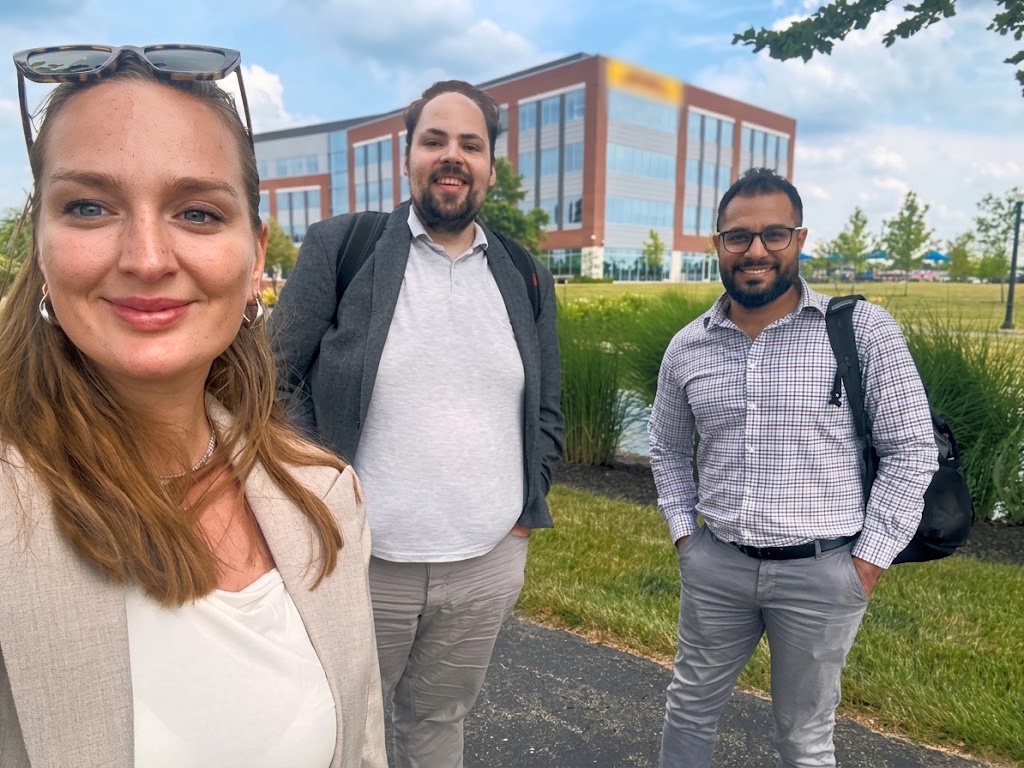

What I try to get right is that anything I hand over comes with the numbers that justify my work: accuracy thresholds, latency budgets, a business case somebody in finance is willing to defend without me in the room. When a project can’t clear those bars, the useful thing is to say so early. Those are not fun conversations and I have had to learn to have them anyway.
Why did i pivot from automotive / motorsports to enterprise AI
To be honest that was a tough decision… I did not do so because stopped enjoying it, rather because i was sitting on “knowledge in a drawer”. Allow me to explain:
Building the Esports programme at Porsche Motorsport was the best time I have had at work, and I would happily do it again.
The problem was at the time that I had just finished a Master’s in Business Informatics with a focus on machine learning, and by 2020 none of it was getting used. Then COVID hit. So i spent my evenings reading papers on model evaluation and my days on vehicle engineering and team management. I enjoyed both but one more as a hobby and one more as a profession.
Motorports and Esports handed me a business to build, which I loved, but it rarely handed me a problem where nobody knew the answer in advance. I wanted the ones where the technology is new enough that you genuinely cannot promise it will work, where the honest answer is “let’s go and measure it”, and where being wrong costs somebody real money. Working at Porsche was about planning & execution in its purest form, Enterprise AI gave me the chance to put an edge technology layer on top of that.
So that is the trade I made, and the range came with it. On a single engagement I might run a technical discovery session with a customer’s technical leadership in the morning, design a model evaluation pipeline that gates a release on retrieval accuracy and latency in the afternoon, and spend the evening arguing about ROI and justifying expenditures with business stakeholders.